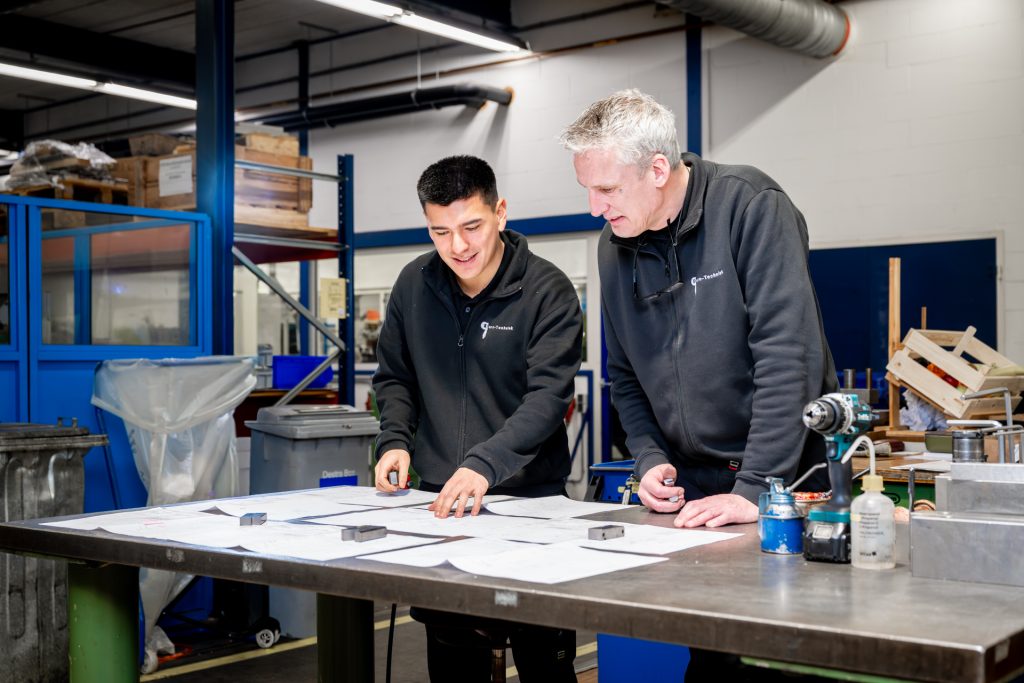
In the world of product development, companies often face an important choice. Do you opt for stamping or injection mouldingBoth techniques are essential for efficient mass production. They have unique properties and applications. The correct choice depends on your specific product. Consider material, shape, and print run. Euro-Techniek would be happy to help you make this strategic decision. We share our expertise.
Wat is stampen precies?
Stamping is a form of metalworking. With this technique, metal sheets are formed into a specific shape. This is done using a punch and a die. The machine applies immense force to the metal. This way, the material is formed, cut, or perforated. This process is highly accurate and remarkably fast. It is ideal for producing large series of identical metal parts. Examples include brackets, connectors, or housings. Euro-Techniek designs and builds the perfect die for your unique product.
The advantages of mashing in a row
The process of tamping offers various significant advantages. This technique is particularly efficient for large-scale production. The high speed and precision make it a popular choice in many industries. At Euro-Techniek, we leverage these advantages to their fullest for our clients. Your project will benefit from proven results. The main benefits include:
- High production speed: Ideal for large production runs.
- Exceptional precision: Each product is exactly the same.
- Strong materials: Suitable for durable metal parts.
- Cost-effective: Low cost per unit at high volumes.
Injection moulding is a manufacturing process for producing parts by injecting molten material into a mould.
Injection moulding is a technique for forming plastic. The process begins with plastic granules, which are small pellets. These pellets are heated until they are liquid. The hot plastic is then injected under high pressure into a mould, the die. In the die, the material cools and takes on the desired shape. The mould is then opened and the product is ejected. This method allows for the creation of complex and detailed plastic parts. Euro-Techniek specialises in this precision work.
The unique advantages of injection moulding
The technique of injection moulding is highly versatile. It offers unique possibilities for your product development. The freedom in design is one of its greatest assets. Almost any conceivable shape can be realised. This makes it a favourite for designers and engineers. Euro-Techniek advises you on the best material choice for your application. The benefits include:
- Extensive design freedom: Complex and detailed shapes are possible.
- Efficient material usage: Little to no waste during production.
- Wide range of materials: Choice of many types of plastics and colours.
- Low product costs: Very economical for large production volumes.
When do you opt for stamping or injection moulding?
The choice between stamping and injection moulding depends on three factors: material, shape complexity, and desired quantity. For metal parts, stamping is the logical choice. This method is perfect for relatively flat or simply curved shapes. Injection moulding is the preferred technique for plastic products. It excels at creating complex, three-dimensional shapes. Both processes are most cost-effective for large production runs. Euro-Techniek offers expert advice on the best technique.
Euro-Techniek's expertise in both techniques
At Euro-Techniek, we possess in-depth knowledge of both stamping and injection moulding. Our engineering department works closely with you, from the initial idea right through to final production. We design and manufacture the High-quality dies entirely in-house. This guarantees a seamless process and the highest quality for your end product. You benefit from one reliable partner for your complete product development. Are you ready to take your project to the next level? Get in touch today Contact Euro-Techniek for tailored advice.